Free nutrition tracker

A stat sheet of what you eat.

Type what you ate in one sentence. Simply Nutrition checks it against 29 daily targets, from protein and fiber to vitamin D and magnesium, using lab-analyzed USDA food data, then shows you what to eat to close the gaps.

No ads. No credit card. Try it without an account.

What it does

Every nutrient, at a glance

Most trackers stop at calories and macros. Simply Nutrition tracks the vitamins and minerals too, and makes it obvious which ones need attention.

Daily scoreboard

One number tells you how your day is going

"19 of 29 targets met." Green is met, amber is close, orange is low, pink is over. Tap any nutrient to see exactly which foods it came from.
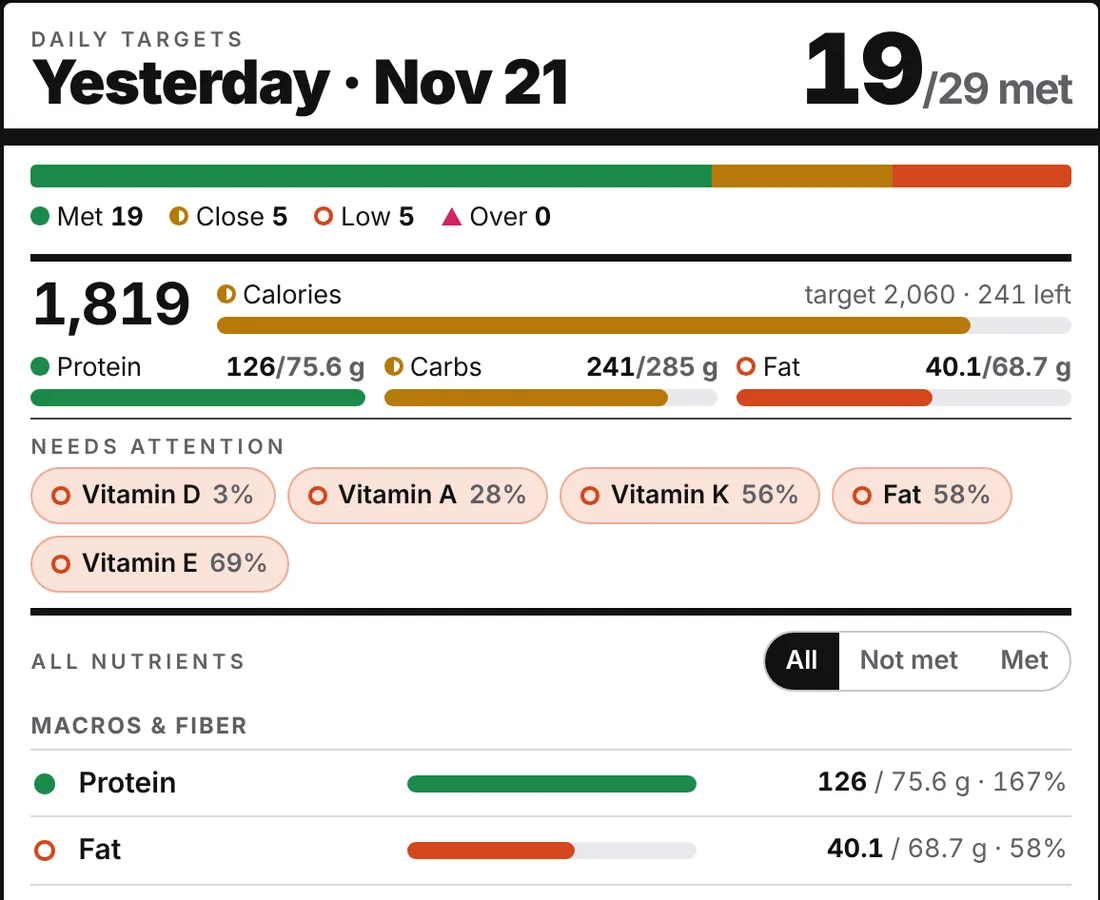
The daily scoreboard: targets met, a status bar, calories and macros, and nutrients that need attention
Gap closer

Low on something? It tells you what to eat

Short on vitamin A today? See everyday foods that would close the gap, ranked by how much they give per calorie, and add one with a tap.
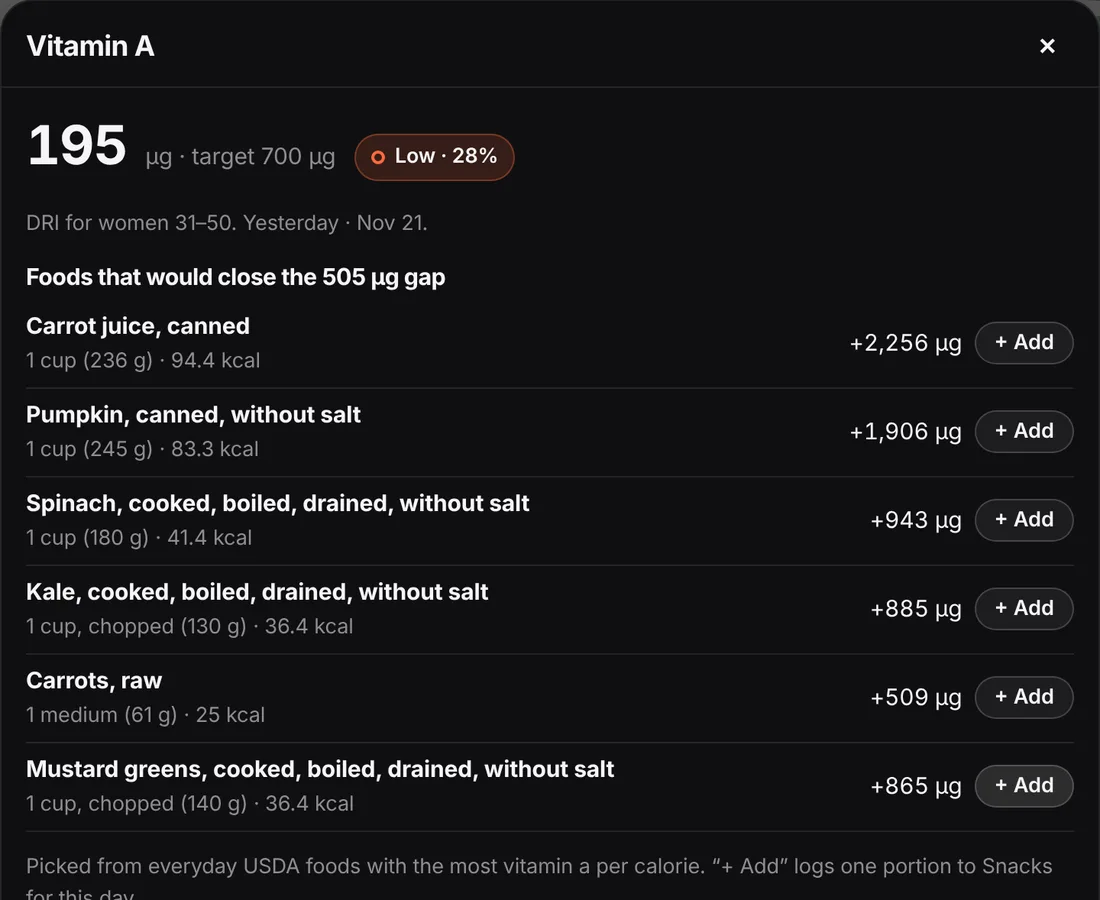
Vitamin A is low: a list of everyday foods that would close the gap, each with an Add button
Target map

See the pattern, not just today

A map of every nutrient across weeks and months shows what you consistently miss, so one off day doesn't hide a real trend, or invent one.
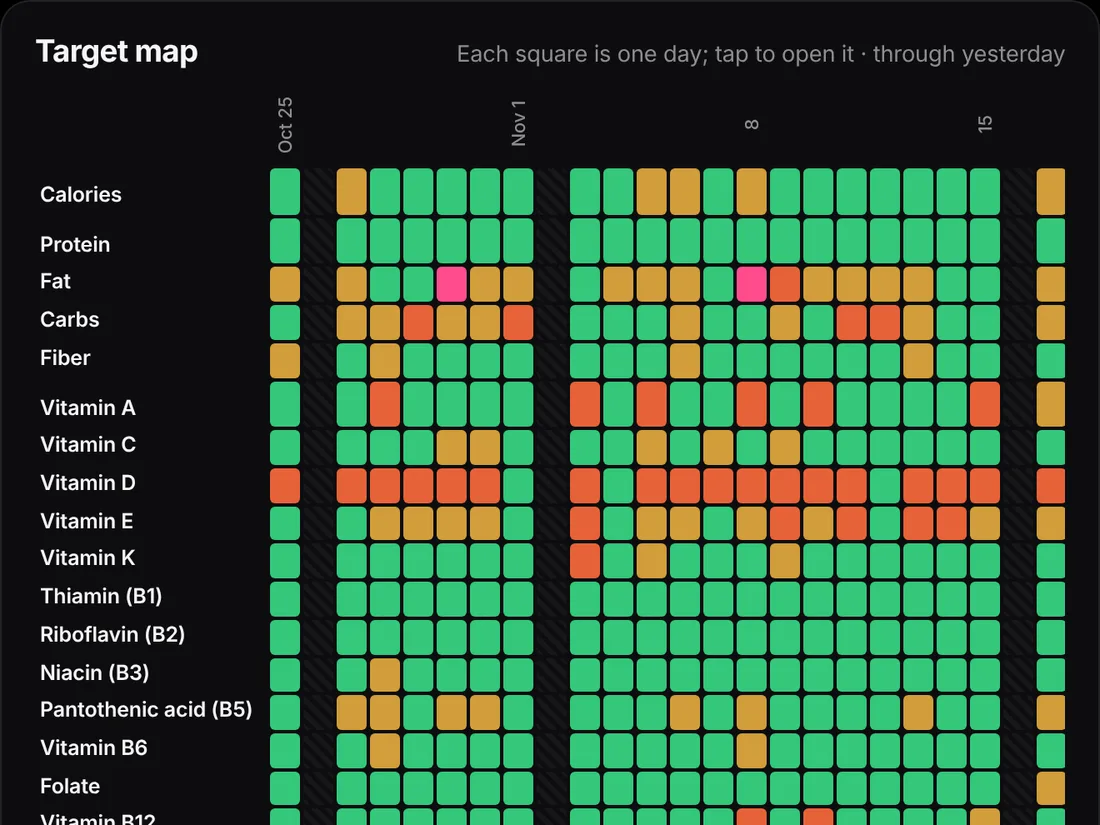
A heatmap of nutrients by day, colored by whether each target was met
Logging

Log a meal the way you'd say it

No scrolling through thirty kinds of oatmeal. Type a sentence, check what it found, and add it. Foods you eat often are one tap away after that.

2 eggs, a slice of whole wheat toast and a banana
  • Egg, whole, hard-boiled · 2 large155 kcal
  • Whole-wheat bread, toasted · 1 slice89 kcal
  • Banana · 1 medium105 kcal
Why trust it

Real data, honest numbers

Lab-analyzed food data

Food values come from the USDA's national nutrient database, not user-submitted guesses. If a value was never measured, the app says so instead of counting it as zero.

Official daily targets

Targets follow the National Academies' Dietary Reference Intakes for your age and sex, and you can adjust any of them.

Free, with no ads

Every feature is free. Nothing is held back for a paid tier, and there are no ads.

Your data stays yours

Use it on one device with no account, or sign up to sync. We never sell your data, and you can export or delete it anytime.

Questions

FAQ

Is it really free?

Yes. Every feature is free and there are no ads.

Do I need an account?

No. You can start logging right away and your log stays in your browser. Create a free account when you want it backed up and synced across your phone and computer.

Which nutrients does it track?

Calories, protein, carbs, fat and fiber; vitamins A, C, D, E, K, B1, B2, B3, B5, B6, B12, folate and choline; calcium, iron, magnesium, phosphorus, potassium, zinc, copper, manganese and selenium; plus sodium and saturated fat as limits.

Where does the food data come from?

The USDA's national nutrient databases: lab-analyzed reference values for thousands of foods, plus the 5,000+ everyday foods the government uses in its national dietary survey. Search results are ranked by how often Americans actually report eating each food (CDC NHANES). You can also add foods from a label, build your own recipes, or search the USDA's larger online database.

Is this medical advice?

No. It's a tracking tool based on general population guidelines. If you're pregnant, managing a health condition or changing your diet significantly, talk to a doctor or registered dietitian.

Where is my data stored?

Without an account, only in your browser. With an account, in a secure database where only you can read your entries. See the Privacy Policy for details.

Find out what you're missing